






Kindergarten Playdates: Helping Your Child Build Friendships
Kindergarten changes everything. Your child goes from a small preschool class to a bigger school with new faces, new routines, and new social expectations. Friendships at this age matter more than most parents think. They're how your child builds confidence, practices age-appropriate social skills, and feels like they belong.
And the fastest way to strengthen those classroom friendships? Playdates outside of school.
Why Kindergarten Playdates Matter
At school, your child sees their friends in a structured environment: circle time, recess, lunch. Playdates give friendships room to breathe. Kids who play together outside of school develop deeper bonds, better communication skills, and more confidence in social situations.
Research consistently shows that children with strong peer friendships adjust better to school, show more engagement in learning, and have higher self-esteem. Playdates are developmental, not just fun.
There's also a practical benefit: when your kindergartener has friends they're excited to see, Monday mornings get a lot easier.
How to Find Playdate Partners
Ask Your Child
Start with the simplest question: "Who do you like to play with at school?" Kindergarteners are surprisingly clear about their social preferences. The name they say over and over is the one to pursue. If they say "no one" or can't name someone, ask their teacher. They see the social dynamics you don't.
Talk to the Teacher
Kindergarten teachers are goldmines for social intel. They know which kids play well together, who's looking for friends, and which families are approachable. A quick email ("Who does [child] gravitate toward at recess?") can point you in the right direction.
School Events
Back-to-school night, curriculum night, fall festival, class parties. These are your opportunities. Other parents are right there, standing around with the same desire to connect. Show up, introduce yourself, and be ready to suggest a playdate. "Our kids seem to get along great. Want to set something up?"
Pickup and Drop-Off
If you do pickup or drop-off in person, this is prime networking time. Stand in the same spot. Smile at the same parents. Familiarity breeds conversation. After a few "hey, how's it going?" exchanges, suggesting a playdate feels natural rather than forced.
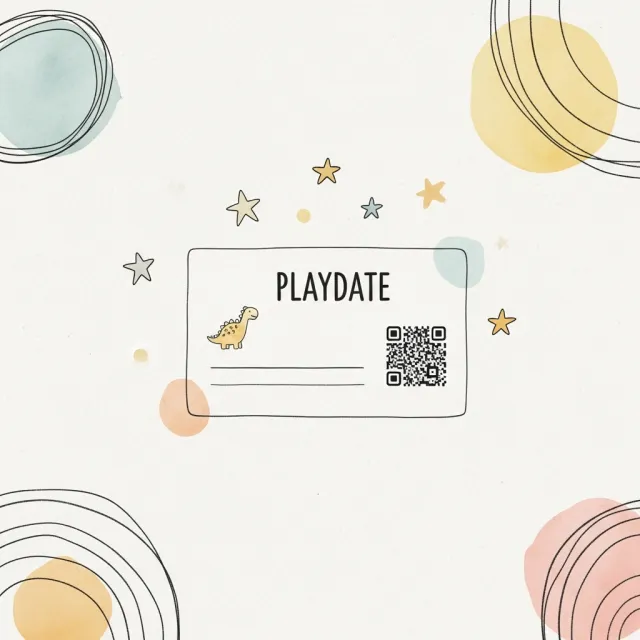
To make the contact exchange easy, keep a few playdate cards in your bag. When the moment comes, just hand one over instead of fumbling with phones.
Setting Up the First Kindergarten Playdate
Duration
1.5 to 2.5 hours is the sweet spot for kindergarteners. They have more social stamina than preschoolers but still run out of steam. After-school playdates work well: pick up, bring home, play until 5 or 5:30. Weekend playdates can be slightly longer.
Structure + Free Play
The best kindergarten playdates have a loose structure: one planned activity, then free play, then a snack, then more free play. You don't need a schedule. Just a rough rhythm that prevents the "I'm bored" spiral.
Good starter activities:
- Art project: painting, drawing, or a simple craft
- Building challenge: LEGO, MagnaTiles, or blocks with a goal ("build the tallest tower")
- Outdoor play: backyard, bikes, scooters, bubbles
- Board game: Candy Land, Sorry!, Connect 4, Uno
After the first activity, most kindergarteners take over and direct their own play. Let them.
Communicate with the Other Parent
Text before the playdate with the basics: time, address, any planned activities, and the key question: "Does [child] have any allergies I should know about?" Also clarify: drop-off or stay? Most kindergarten parents are comfortable with drop-off if they know the family.
Best Activities for Kindergarten Playdates
For age-appropriate ideas you can pull up on your phone mid-playdate, our activity finder deals you one printable card at a time — tagged by age and materials on hand. The broader categories below cover what tends to work for the K–1 stretch.
Outdoor Adventures
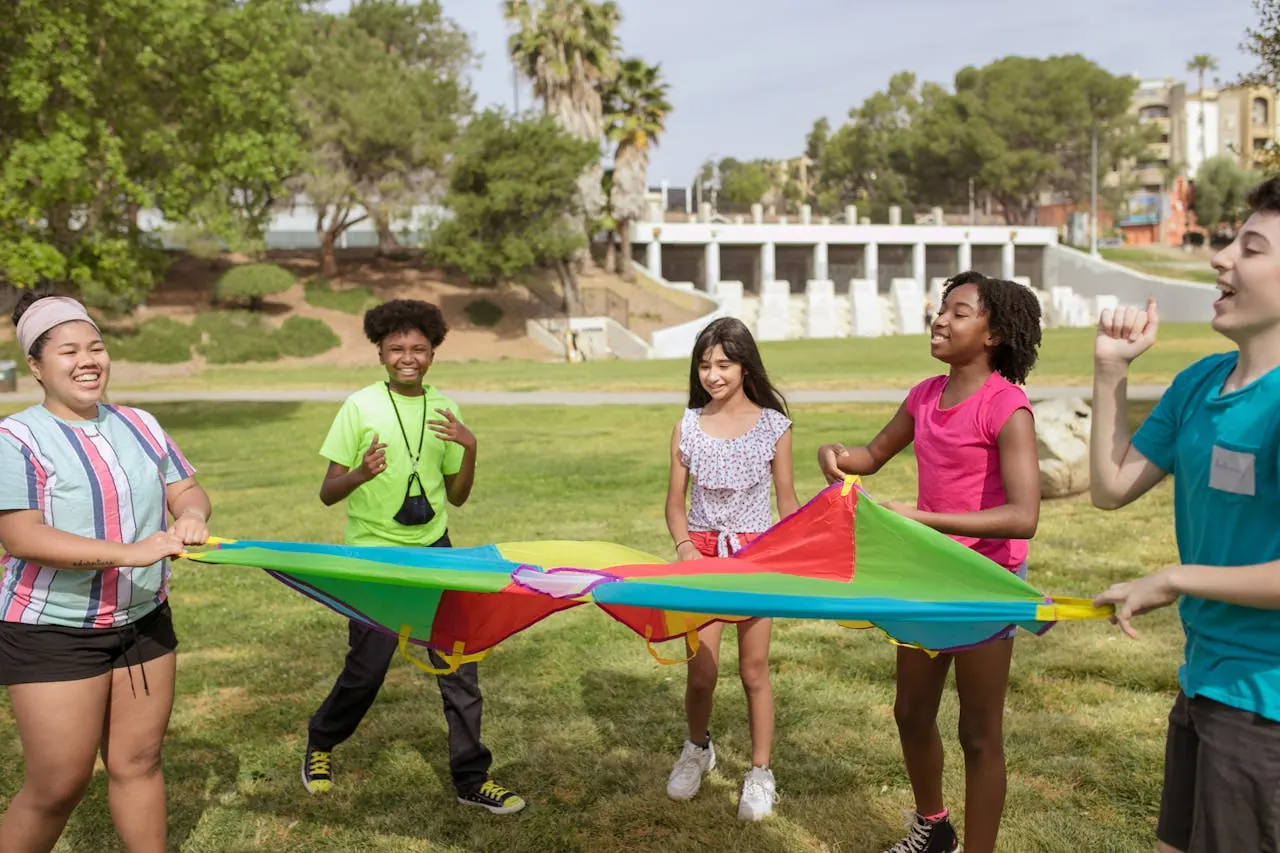
Kindergarteners have energy to burn. Bikes, scooters, tag, hide-and-seek, or a trip to the park all work brilliantly. Outdoor playdates are also the easiest to host. Less mess, more space, and the physical activity prevents restlessness.
For warm weather, get creative: sprinklers, obstacle courses, or a backyard scavenger hunt.
Building and Construction
LEGO sets (age-appropriate), MagnaTiles, wooden blocks, or even cardboard box forts. Give them a building challenge and watch collaboration happen naturally.
"Can you build a house for all these stuffed animals?" That's all the direction they need.
Board Games and Card Games
Kindergarteners are at the perfect age for simple board games. Uno, Connect 4, Guess Who, and Sorry! all teach turn-taking, winning gracefully, and losing without a meltdown (mostly). Having 2-3 game options available lets kids switch if one isn't working.
Arts and Crafts
Painting, drawing, collages, friendship bracelet making, or following a simple craft tutorial together. Kids at this age love making things to take home. Set up a designated art area with a plastic tablecloth and let them create.
Pretend Play
Dress-up, restaurant, school, doctor's office, spaceship. Kindergarteners are master pretenders. A box of props (old clothes, hats, scarves, toy tools) can fuel an hour of imagination. Don't be surprised if they create elaborate scenarios with rules, roles, and plot twists.
For a bigger list of activities, check out our 35 playdate ideas organized by age or our indoor playdate ideas for rainy days.
Drop-Off vs. Stay
Most kindergarteners are ready for drop-off playdates, especially with families they know. But every child is different, so think through a few scenarios:
- First playdate with a new family? The visiting parent should offer to stay: "I'm happy to stay for this first one if that's easier." This gives everyone a comfort level check.
- Your child is nervous? Have the parent stay for the first 15-20 minutes, then leave once the kids are engaged. A quick, confident goodbye works best. Lingering makes it harder.
- The other parent wants to stay? Welcome them. Have coffee ready. These parent-stays often turn into the best networking opportunities.
- Drop-off is fine? Get the parent's cell number, confirm pickup time, and briefly mention your house rules ("shoes off inside, no screens during playdates").
Building Your Kindergarten Parent Network
Most parents don't realize this, but the relationships you build during kindergarten often last through elementary school. These become your carpool partners, emergency contacts, birthday party invitees, and the parents you text when school sends a confusing email.
Some ways to build your network:
- Volunteer. Even one classroom volunteer day or school event shifts you from "stranger" to "familiar face."
- Start a class contact list. If your school doesn't have one, ask the teacher if you can organize one. Be the parent who makes it easy for everyone to connect.
- Invite broadly. Don't limit playdates to your child's best friend. Invite different kids throughout the year. Your child might surprise you with who they click with, and you'll meet more families.
- Be responsive. When another parent reaches out, respond quickly and enthusiastically. The parents who respond "yes, we'd love to!" are the ones who build the biggest networks.
For more strategies, read our guide to networking for moms.
FAQ
How often should kindergarteners have playdates?
There's no right number, but 1-2 times per month is a great rhythm. More is fine if your schedule allows it. The key is consistency. Regular playdates build deeper friendships than occasional ones.
What if my child doesn't want playdates?
Some kids need more time. Don't force it. Instead, try low-pressure social situations first: meeting a friend at the park (where they can retreat to you if needed) or a short playdate at your house. Some children are simply more introverted, and that's completely normal.
What about screen time during playdates?
Our recommendation: keep screens off during playdates, at least for the first several. The AAP's guidance on children and screens emphasizes the importance of face-to-face interaction. If you need a wind-down activity near the end, a short show is fine, but make it the exception rather than the plan.

My child only wants to play with one friend. Is that okay?
Yes. Having one close friend is perfectly healthy. But gently encourage expanding the circle over time. "What if we invited [other child] too?" or scheduling playdates with different kids on different weeks helps broaden social skills without threatening the primary friendship.
Ready to start connecting with kindergarten parents? Create a free playdate card and hand it out at school. It's the easiest way to turn classroom friendships into real ones.
Sources
Guidance in this article draws on the following authoritative resources.
- Centers for Disease Control and Prevention. “Milestones by 5 Years (Learn the Signs. Act Early.).” cdc.gov
- Society for Research in Child Development. “Effects of the Peer Group on the Development of Social Functioning and Academic Achievement (Child Development, 2008).” srcd.onlinelibrary.wiley.com
- Child Mind Institute. “How to Help Your Child Make Friends.” childmind.org
- American Academy of Pediatrics. “AAP-AACAP-CHA Declaration on Children and Screens.” aap.org
Keep Reading
What Is a Playdate? Meaning, Ages & How to Plan One
What a playdate actually is, how it works, and why it matters for your child's social development. A no-nonsense guide for parents.
42 Playdate Ideas Kids Actually Love (Toddler to Age 10)
42 playdate ideas for every age — toddler to 10, indoor and outdoor. Fresh games, crafts, snacks, and hosting tips. No boring, no Pinterest-perfect required.
Playdate Etiquette: How Long, Drop-Off & the Do's and Don'ts
How long should a playdate last, do you stay or drop off, and what to ask first — a simple playdate etiquette guide for parents, by your kid's age.
Your Child's First Playdate: Tips, What to Expect & Ideas
Everything for your child's first playdate — how to pick the right friend, what to expect, how long to stay, and calming first-time nerves.